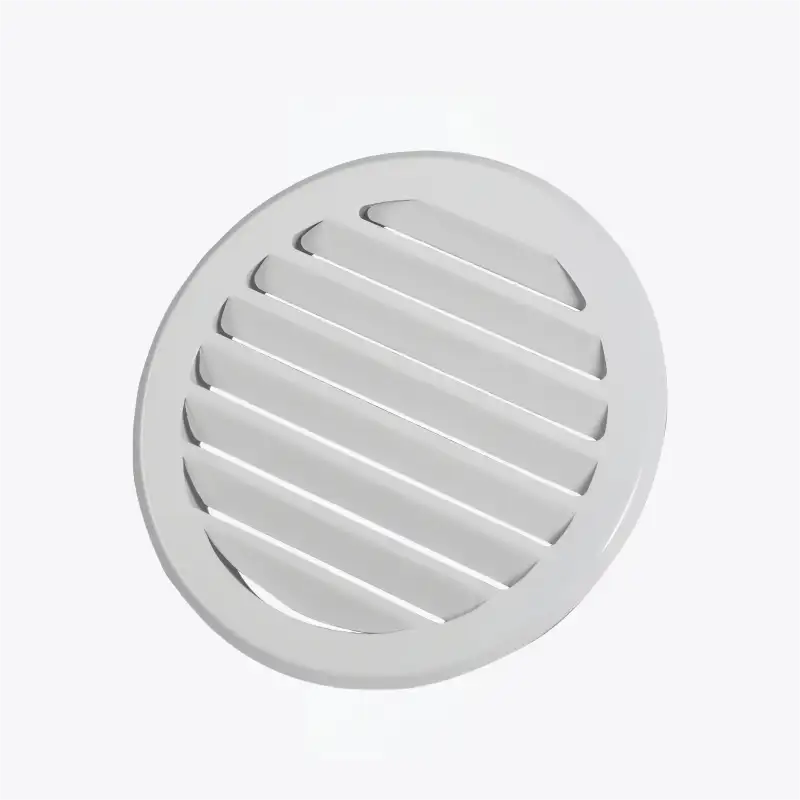
Veteran Guide to Choosing: What’s the Difference Between Aluminum Alloy Spherical Air Vents and Swirl Nozzles?
Spherical Diffusers vs. Swirl Nozzles: Stop Confusing Them!
Friends in engineering and procurement, you’ve surely faced this dilemma: aluminum alloy spherical air outlets and swirl diffusers both look like air vents, yet their quotes differ. Which one should you choose? Today, we’ll cut to the chase and explain their differences, applications, and selection criteria in plain language—all in one go!
Meet These Two “Guys”
Although both are aluminum alloy vents, they are fundamentally two different “creatures” with entirely different design philosophies.
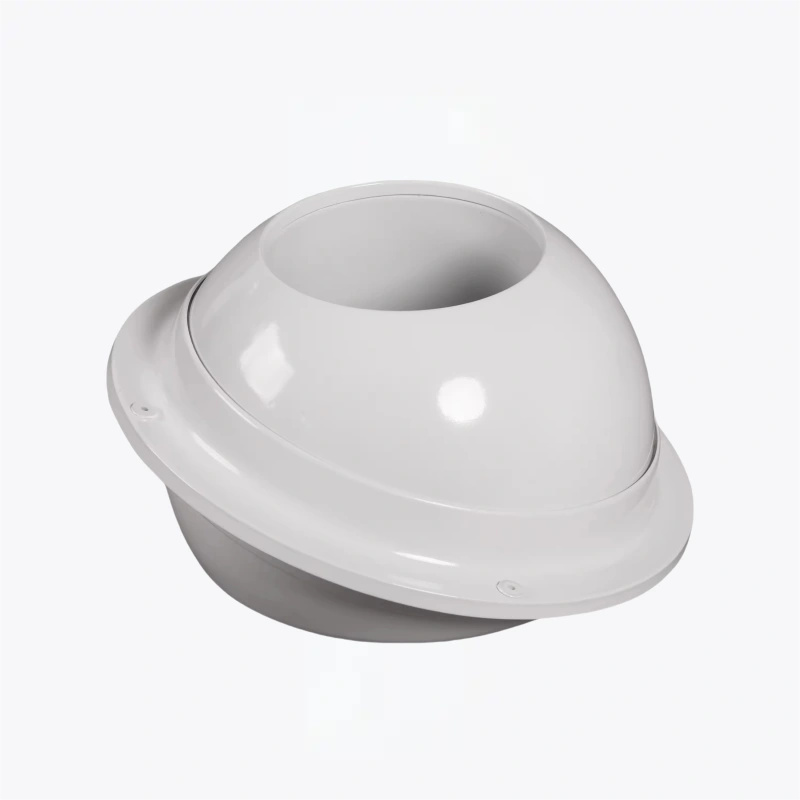
Spherical Air Vent: Just like a “swiveling electric fan”
Its head (that spherical nozzle) lets you manually rotate it up, down, left, or right. Simply turn the head in the direction you want the airflow to go—it’s incredibly straightforward.
Core Skill: Flexible aiming—point and shoot.
To put it another way: It’s like the small desk lamp on your table—its head can swivel freely to illuminate wherever you want it to shine.
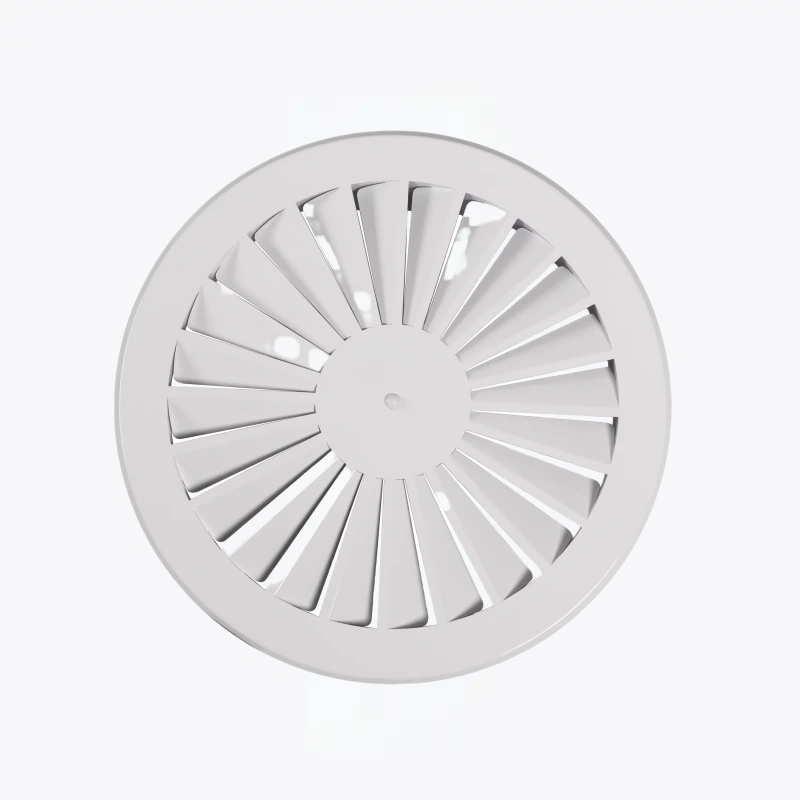
Swirl Nozzle: This is a “long-range heavy-duty cannon.”
It resembles a cylinder with a clever design inside—special blades that make the wind “spin.” Its goal isn’t flexibility, but to deliver wind dozens of meters away without making you feel the full force of a strong breeze.
Core Capability: Delivers airflow far and evenly, covering a large area.
To put it another way: It’s like a high-pressure water gun used on construction sites, which uses the force of rotation to spray water far and wide, covering a large area.
What’s the Difference Between Them? A Single Chart Explains the Core Differences
To make it clear at a glance, here’s a list:
| What are we comparing? | Spherical air vent | Swirl nozzle |
| core competency | Flexible steering, localized airflow | Long-range airflow delivery, full coverage |
| Working Principle | Blow directly, and the wind will rush in one direction. | Let the wind spin outward, carrying the surrounding air along with it. |
| Feeling the breeze | Up close, the wind feels strong; from a distance, it loses its force. | The wind is both distant and gentle, and the temperature is uniformly consistent throughout the entire area. |
| How far can it blow? | At close range, typically within a few meters, the effect is optimal. | Super far? Twenty or thirty meters? Piece of cake. |
| Where is it mainly used? | Office, small room, low ceiling | High-ceilinged spaces (stadiums, airports, large factories) |
| Price | Relatively cheaper | It’s relatively expensive, given its complex structure. |
Breaking It Down: Why Do They Feel So Different to Use?
The Fundamentals: One Straightforward, One Technical
The spherical vent is straightforward—air flows out of the duct and it just blows it out. Twist it, and it changes direction. Simple and direct, but the air doesn’t travel far and can easily make people uncomfortable.
The swirl nozzle employs a technical flow mechanism. Air is first spun dizzy by the blades inside before being expelled outward. This rotation is remarkable—it acts like a magnet, drawing in vast amounts of surrounding air to join the flow. The result is increased air volume, extended delivery distance, and a blend with ambient air that ensures the air feels neither cold nor harsh when it hits people.
Where to Apply: Choose the right approach for the situation; pick the right vent based on the space.
Applications for spherical air outlets:
Your home, my office: At your desk, adjust the airflow direction anytime—just don’t blow it right on your head.
Small shops, meeting rooms: With low ceilings, this is the most cost-effective solution.
Applications requiring swirl nozzles:
High-end venues: stadiums, airports, theaters, and atriums of large shopping malls. With ceilings soaring tens or even dozens of meters high, without swirl diffusers, the air simply can’t reach the floor. People down below swelter while the cool air lingers high up, floating aimlessly.
Heated air can also be delivered in winter: since hot air is lighter, it tends to rise. The swirl nozzle can be angled to direct the warm air to “hug” the ceiling for a stretch before descending, delivering superior results.
How to Choose in Real Combat? A Veteran’s Ironclad Rules
When it comes to construction projects, the worst thing is making the wrong choice. Keep these points in mind, and you’ll likely avoid major setbacks:
First, measure the ceiling height!
For ceilings under 4 to 5 meters, prioritize spherical vents—they’re affordable and sufficient.
Ceiling height > 5–8 meters? Don’t hesitate—go straight for the swirl nozzle.
Ask about requirements again!
Want more airflow in a specific corner? Choose a spherical vent.
Want to keep the entire hall cool without drafts? Choose swirl nozzles.
Lastly, check your wallet and the season!
When budgets are tight, go with spherical air vents.
Even in winter, it delivers warm air—its swirl nozzle outperforms all others.
Frequently Asked Questions: These Are the Questions People Ask on Site
With such a powerful airflow coming out of the swirl nozzle, won’t people below find it noisy and get blown around?
Q: With such a powerful airflow coming out of the swirl nozzle, won’t people below find it noisy and get blown around?
A: Quite the opposite! Precisely because it stirs the wind up there, by the time it drifts gently down to you, it’s soft and evenly distributed—making it the most comfortable experience. You won’t have to worry about strong winds blowing directly on you at all.
Can I install a bunch of spherical air vents in high places instead of swirl nozzles?
A: Absolutely not! That’s money down the drain. The air from a dome-shaped vent simply won’t blow downward. The result is the AC working overtime while people below still complain about the heat—all that energy wasted before it even reaches its target.
Q: Why are swirl nozzles so expensive?
Closing Argumentsa
To put it simply, it boils down to two sentences:
Spherical air vents are “precise local specialists,” ideal for small spaces with flexible control.
Swirl nozzles are the “global control experts,” specifically designed to tackle air distribution challenges in tall spaces.